We are part of the Helvetia Baloise Group. Find out more.



Every second person has put off dreams for too long

In brief:
- 74% of people in Switzerland think that they are lucky in life. This feeling is particularly pronounced among people aged 65 or older and among well-off people.
- However, feeling positive about life is not always translated into decisive action. Almost every second person (49%) says that they have put off personal dreams for too long. This is particularly widespread among middle-aged and younger groups.
- In daily life, the 18-34-year-olds in particular would like to have the confidence to do more, and 74% of the younger generation would like to step out of their comfort zone more often. For 37% of those surveyed, saying “No” takes courage, and 34% find it difficult to address problems openly or to deal with conflicts.
- Here, people say that having faith in their own abilities makes it easier for them to step out of their comfort zone. 56% of those surveyed share this opinion.
- People who dare to do something usually look back on these moments as something positive – for example, making the move to self-employment, taking up a new profession (both 93%) or even a separation (69%).
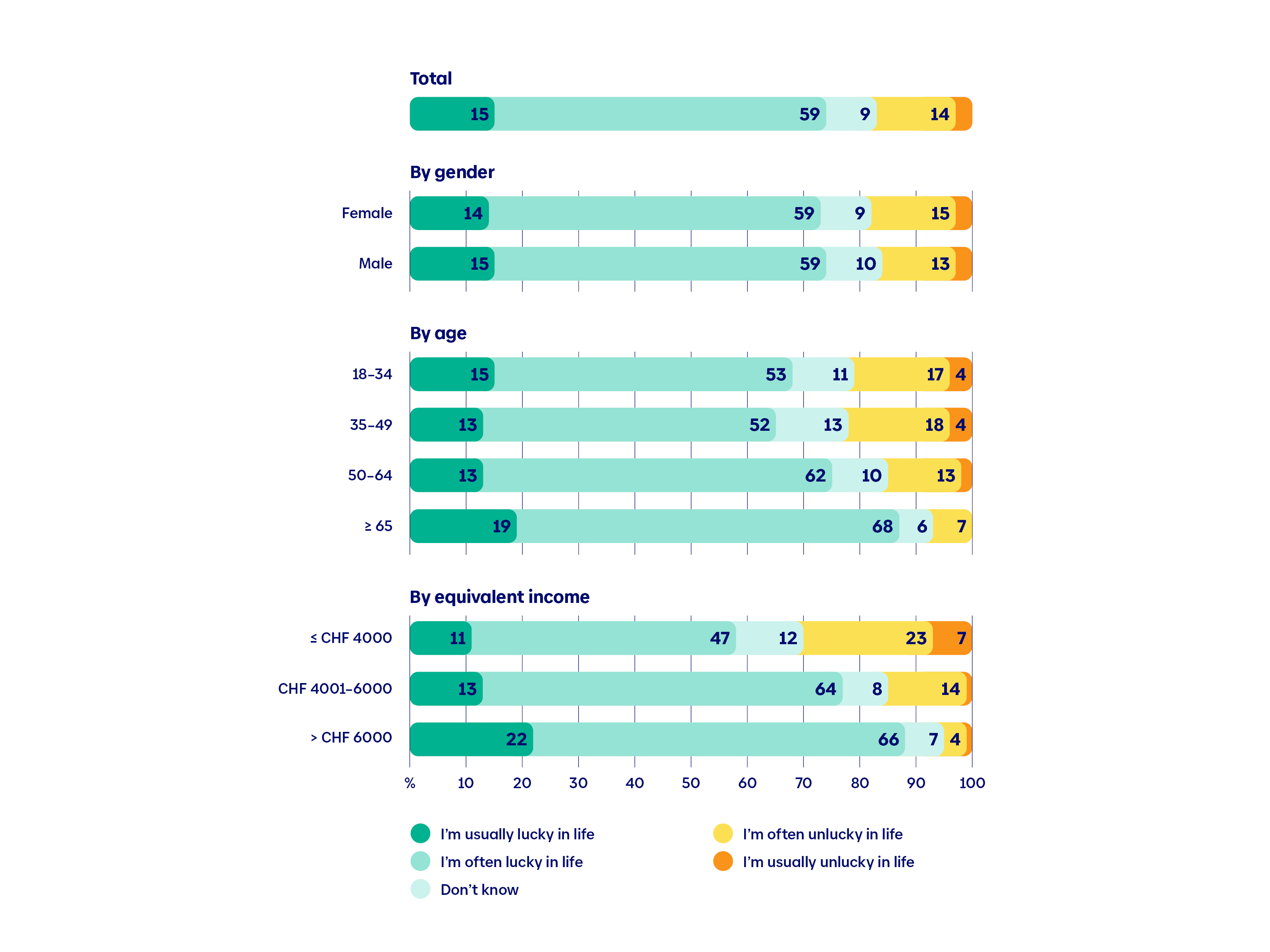
74% of those surveyed agreed with the statement that they are usually or often lucky in life. This is shown in a representative survey of 1,866 adults in German-speaking and French-speaking Switzerland. It is also particularly pronounced among those aged over 65 (87%) and among well-off people with an equivalent monthly income of over CHF 6,000 (88%). Among people with an equivalent monthly income below CHF 4,000, only 58% say that they are usually or often lucky in life. Only a very small minority of people in Switzerland (3%) believe that their lives are dominated by bad luck.
Figure 1: Luck in life
“Which of the following statements about your life is the most appropriate?”
Almost every second person has put off their dreams
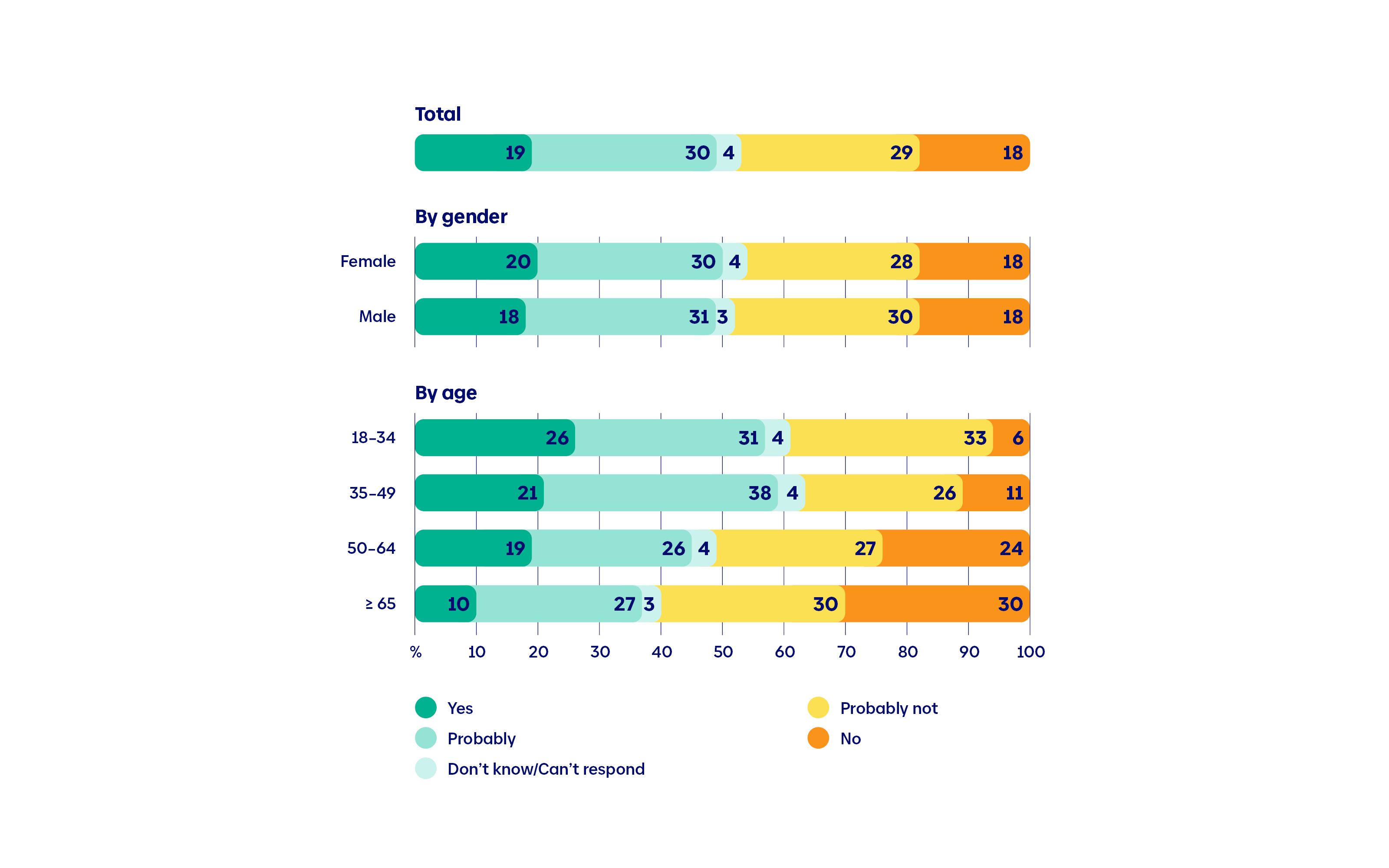
However, feeling positive about life is not always translated into decisive action. Almost every second person (49%) says that they have put off personal dreams for too long . This is particularly widespread among the middle-aged and younger age groups: Among 19-34-year-olds the percentage is 57% and 59% among 35-49-year-olds. And among those aged 65 and older it applies to 37%.
Figure 2: Putting off personal dreams
“Do you have the feeling that you have put off personal dreams for too long in your life?”
At the same time, 57% of those surveyed admit to having big dreams in their current life stage. Here too, there are clear differences between the generations: 68% of 18-34-year-olds and 48% of persons aged 65 or older. The biggest dreams are in the areas of health and fitness, travel and experiences as well as finance and property. These are followed by partnership and family as well as professional dreams. Only a small minority said they do not currently have any big dreams.
The young generations in particular would like the confidence to do more
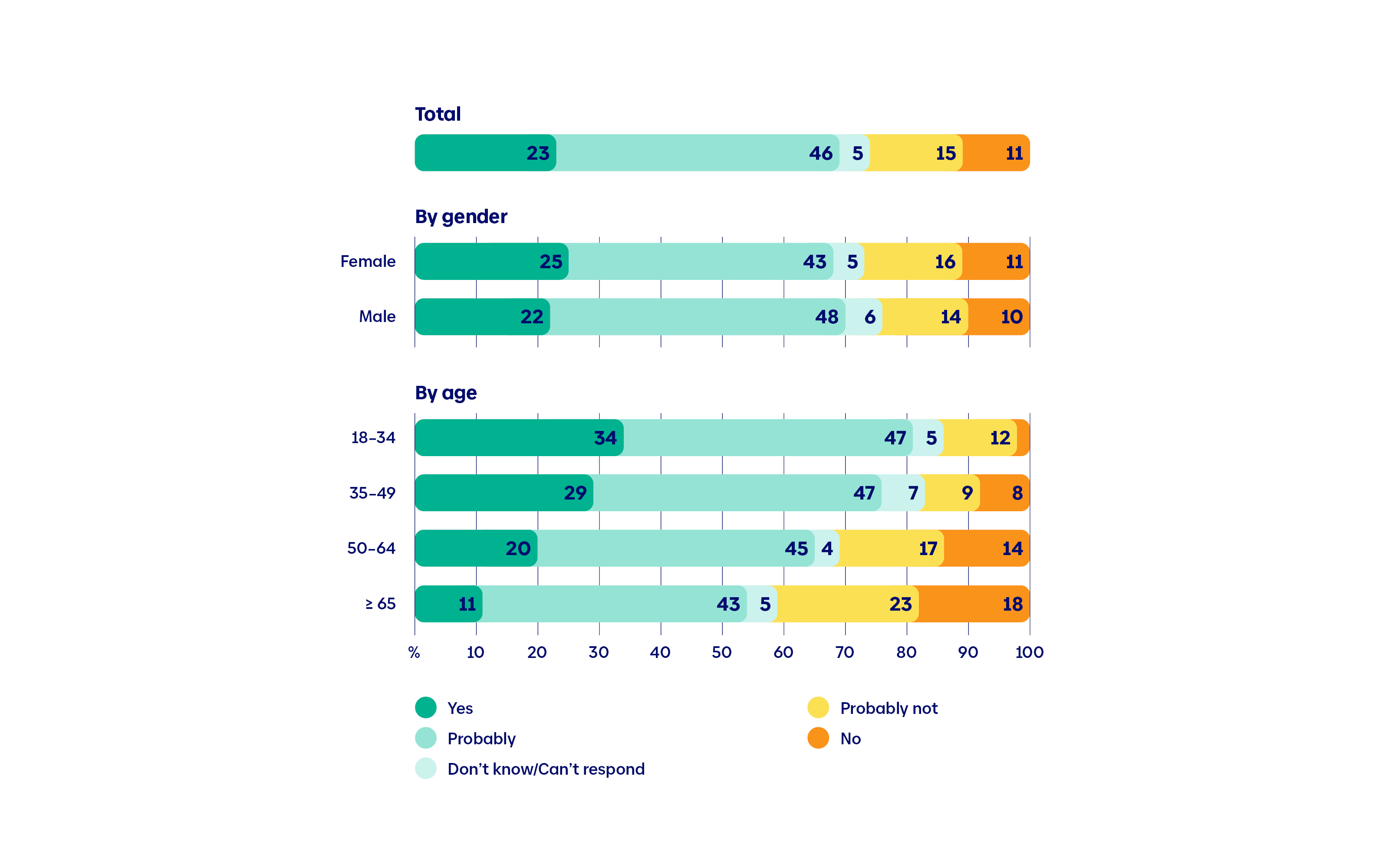
69% of those surveyed said they would like to dare to do more in daily life. This wish is particularly widespread among the young generation (18-34-year-olds) (81%). “Young people in Switzerland generally view their lives positively. At the same time they have the feeling that they themselves are sometimes an obstacle in terms of their personal wishes and in daily life“, says Michael Hermann from Sotomo.
Figure 3: Daring to do more in daily life
“Would you like to dare to do more in daily life?”
A piece of advice that people today would pass on to their younger selves most often: “Trust in yourself and in the fact that change can also result in something good.” 50% are convinced that for each door that closes, a new one opens. In addition, just under half of those surveyed would advise their younger selves to trust their gut feeling (47%) and their own abilities (“You can do it”, 43%).
Saying “No” takes more courage than an adventure.
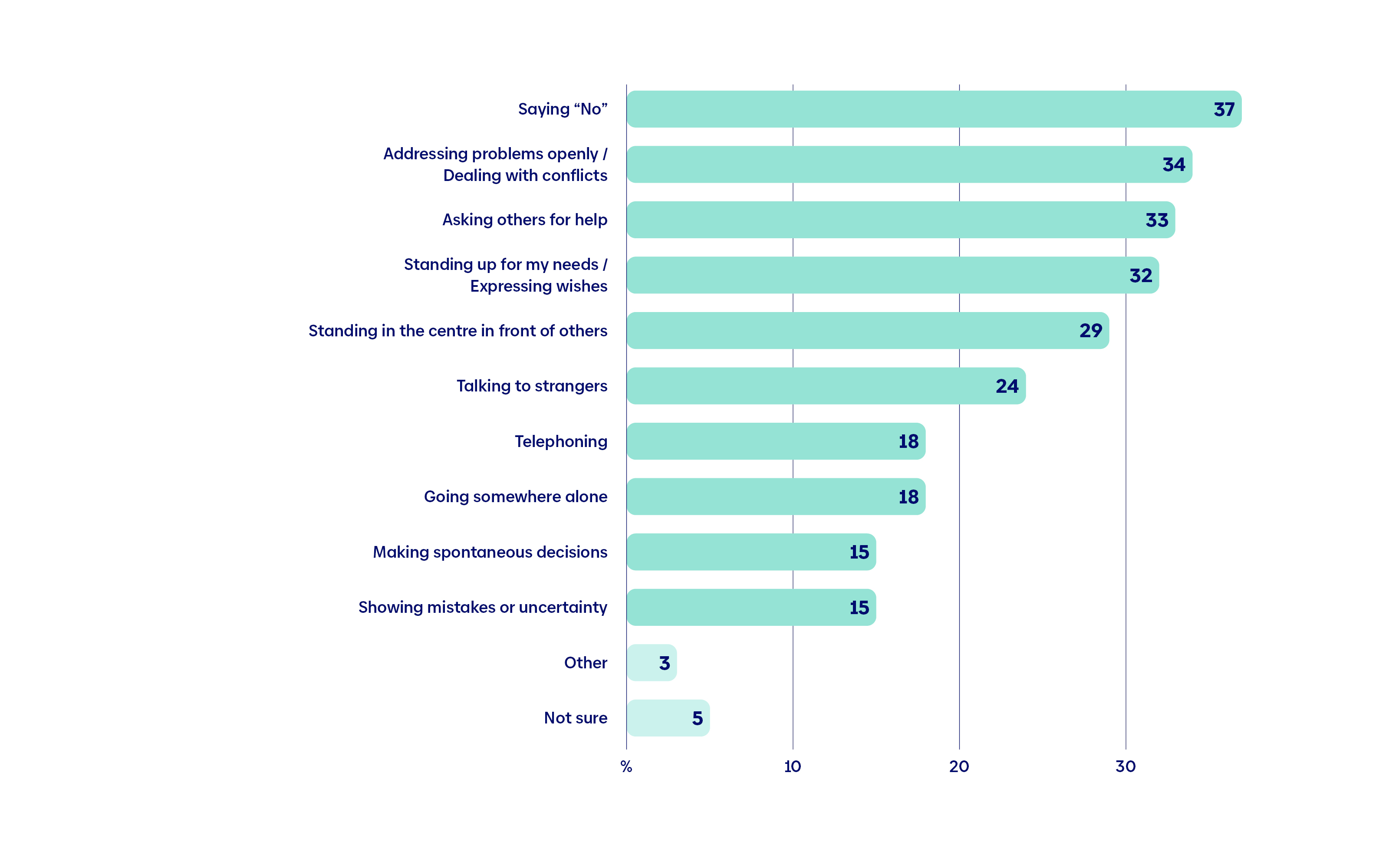
The wish for more courage is seen particularly in everyday social situations. 37% of those surveyed say it takes an effort to say “No”. 34% find it difficult to discuss problems openly or to deal with conflicts. One third (33%) need to pluck up courage to ask others for help, and 32% find it difficult to stand up for their own needs or to express wishes. 29% need to summon courage to be at the centre of attention while 24% find it difficult to talk to strangers.
Figure 4: Courage in daily life
“What do you need considerable willpower for in daily life? (Several answers possible)”
Women in particular cite social situations more frequently as a challenge. 40% of women and only 34% of men thus find it difficult to say “No”. Addressing conflicts openly is difficult for 37% of women and 32% of men, asking others for help is difficult for 37% of women and 29% of men and standing up for one’s own needs is difficult for 37% of women and 27% of men.
Most of those surveyed would like to step out of their comfort zone more often
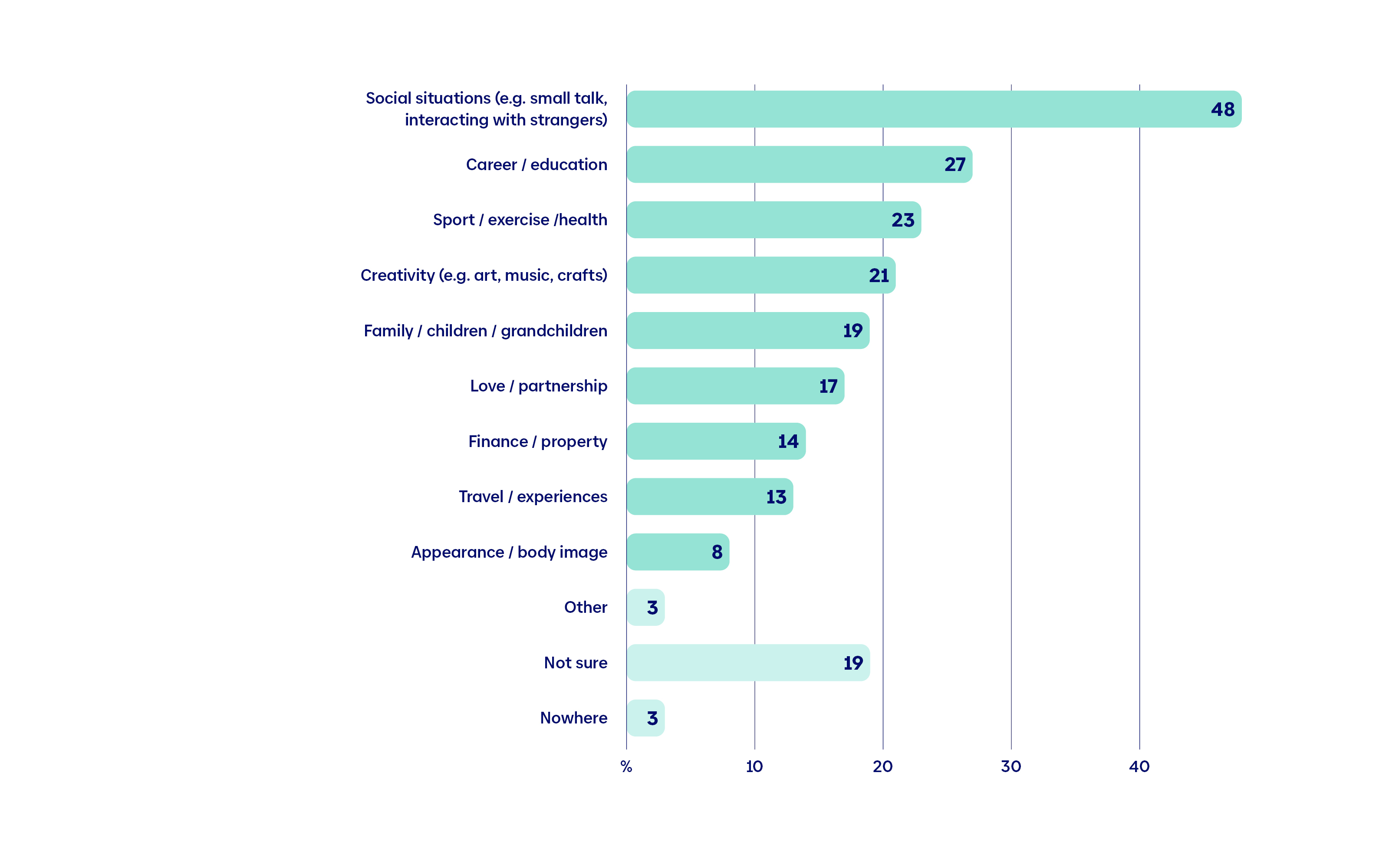
Overall, 55% of the people surveyed would like to step out of their comfort zone more often. Among 18-34-year-olds the percentage is 74%, compared with 35% for those aged 65 and older. At the same time, 74% believe that people in Switzerland should generally step out of their comfort zone more often. The demands they place on society are therefore higher than those placed on themselves. Those surveyed find that people should have the courage to do more, especially in social situations, such as engaging in small talk or in contact with strangers (48%). Also in fields such as work and training (27%), sport, exercise and health (23%) or in creative fields such as art, music and crafts (21%), those surveyed would like people in Switzerland to step out of their comfort zone more often.
Figure 5: Areas in which people in Switzerland should have more courage
“In which areas do you feel that people in Switzerland should dare to do more? (Several answers possible)”
Faith in one’s own abilities helps the most
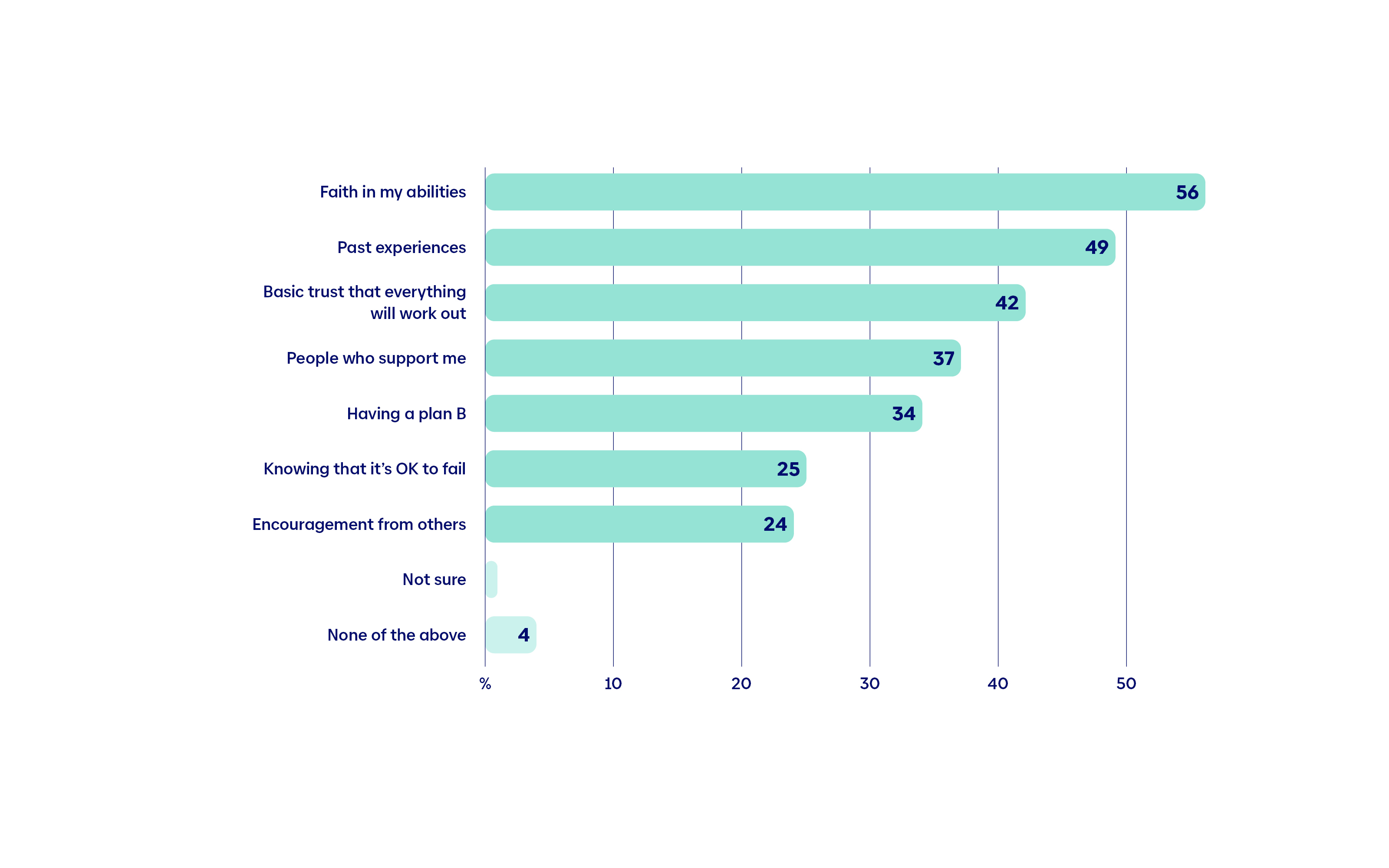
Faith in one’s own abilities most frequently helps people to step out of their comfort zone. 56% state this as key support. Past experience follows (49%), and basic trust that everything will work out scores 42%. For 37%, people that help them are important, and for 34% having a plan B helps.
Figure 6: Factors for stepping out of one’s comfort zone
“What makes it easier for you to step out of your comfort zone? (Several answers possible)”
The generations differ quite considerably here. Young adults rely on their circle of friends in particular. For 50% of 18-34-year-olds, it’s the people who support them. For those aged 65 and older the percentage is 22%. Older people, by contrast, rely more heavily on their experience. 59% of those aged 65 and older mention past experiences as an aid. On the other hand, this applies to only 36% of younger survey respondents. “Courage rarely comes from within. People need self-confidence as well as relationships that give them security and support”, explains Simon Weiner, Head of Sales Network and Marketing at Helvetia in Switzerland. “As a partner specialising in insurance, pensions, wealth management and home ownership, we want to help people face change with confidence and fulfill their plans.”
Major steps usually appear correct in hindsight
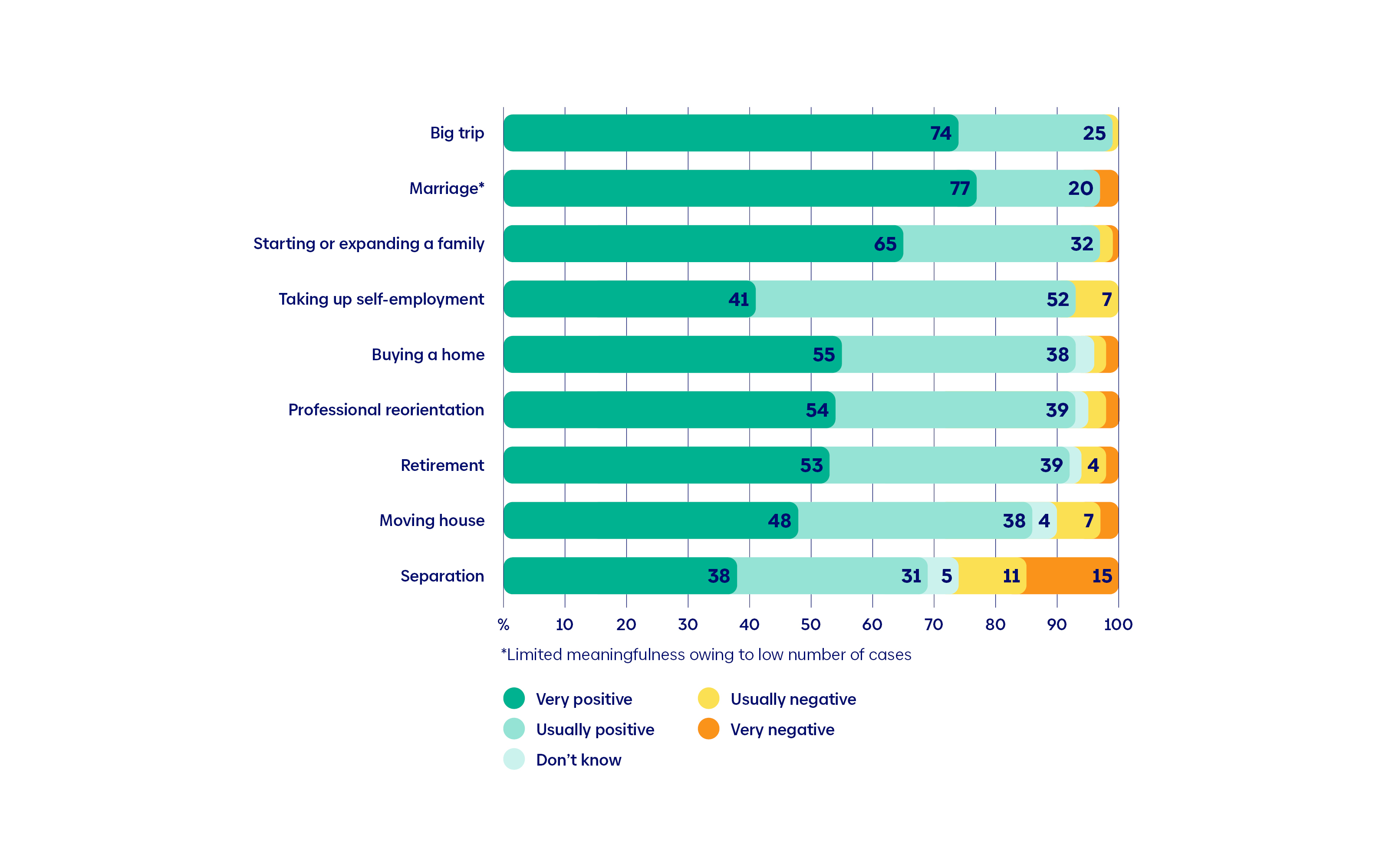
If a person dares to do something, they usually view this as positive retrospectively. 99% of those surveyed view a big trip as very or quite positive, and 97% see marriage and starting or expanding a family as positive experiences. Taking up self-employment, buying a home or embarking on a new profession are generally viewed positively too. And even changes that initially can trigger major concerns, such as a separation, are often seen in a different light later on. 69% of those surveyed look back positively on such events. “The results clearly show that what at first requires courage and willpower is later often seen as an important and correct step in a person’s life”, says Michael Hermann from Sotomo.
Figure 7: Looking back on a life event
“How do you look back today on major life events?”
About the survey
The data was collected between 9 and 18 June 2026. Data from 1,866 people was included in the analysis. The weighted sample is representative of the resident population of Switzerland in terms of key socio-demographic characteristics.
Media
Corporate Communications
Telefon: +41 (0)58 280 50 33
media.relations@helvetia-baloise.com
Analysts
Investor Relations
Telefon: +41 (0)58 280 89 91
investor.relations@helvetia-baloise.com